We’re at the end of Q3, which means a lot of founders are about to sit down with a coffee and a notebook and ask themselves how the quarter went: what went well, what didn’t and what they’d do differently next time.
That’s a genuinely good habit… and if you do it, please keep doing it! Reflection is how you notice what drained you, what you’re proud of and what you’ve been quietly avoiding and most founders don’t make nearly enough time for it.
But reflection and a quarterly business review are two different jobs. Reflection tells you how the quarter felt. A proper quarterly review tells you what actually happened in the business, why it happened and what deserves your attention next. You need both and most of us only ever do the first one.
Why your quarterly review can’t just be about how it felt
The trouble with judging a quarter on feel is that businesses are very good at telling you a comforting story.
Revenue might be up on last quarter, which feels like progress, but if margins dropped because you discounted your pricing to close deals, or delivery costs crept up, you may have worked harder to make less. And even if profit looks healthy, cash can still be going the wrong way if invoices are sitting unpaid. Revenue, profit and cash are three different stories, and they don’t always agree, which is why the numbers need to sit at the heart of any small business review.
The same goes for sales. When things slow down, the instinct is usually “we need more marketing”, but more leads won’t help if good prospects are dropping out after the proposal stage, or follow-up is slow. Until you know where the funnel actually leaks, you’re guessing at the fix.
Marketing has its own version of this. A post that reached thousands of people feels like a win, and sometimes it is, but if it didn’t produce a single enquiry, subscriber or conversation, it’s worth being honest about what it was really for.
Then there’s you. For a lot of founders, the thing quietly limiting growth isn’t the market or the product. It’s that every decision, approval and client relationship still runs through them. That’s not automatically a problem, but it should be a choice rather than an accident.
None of this shows up when you only ask how the quarter felt. It shows up when you audit your business properly.

How to do a quarterly business review that actually works
A useful quarterly business review does four things, in this order:
- Audit. Look at what actually happened: your financials, your sales pipeline, your marketing, your customers, delivery, capacity and where your time really went.
- Diagnose. Separate symptoms from causes, and find the one constraint that’s limiting everything else. “Sales are down” is a symptom, not a diagnosis.
- Decide. Make clear calls about what to double down on, what to fix, what to stop, what to test and what to simply keep an eye on.
- Plan. Turn that into no more than three outcomes for the next 90 days, with a weekly scorecard of the numbers that tell you early whether the plan is working.
The point isn’t to fill in a template for the sake of it. It’s to understand the business well enough to make fewer, better decisions, and then check whether those decisions actually worked. Done every quarter, it becomes the rhythm that stops you drifting from one busy month to the next.
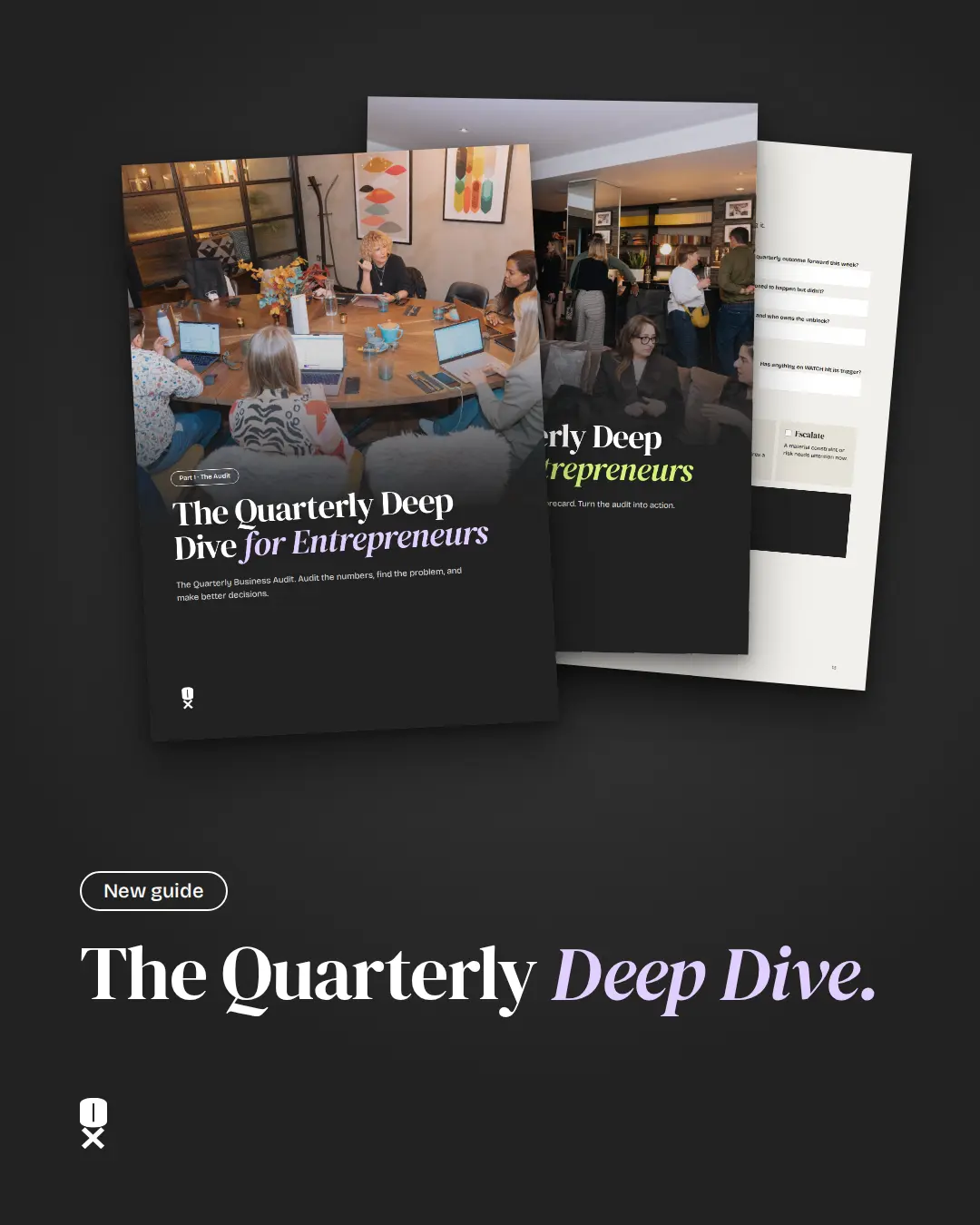
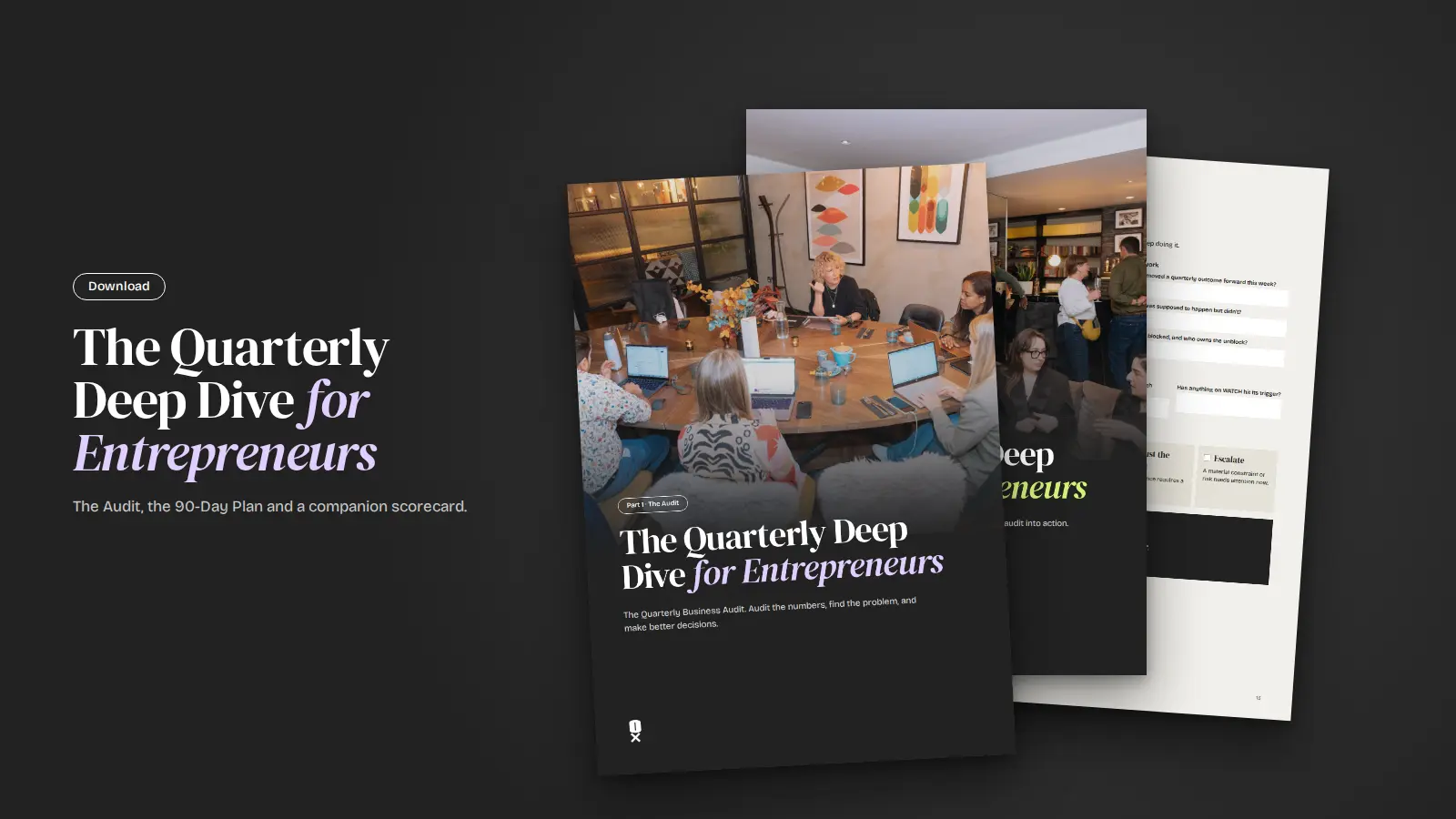
The Quarterly Deep Dive for Entrepreneurs
We’ve built the whole process into a free quarterly business review template you can download below. It comes in three parts.
- Part 1: The Quarterly Business Audit takes you through your financial health, sales engine, marketing performance, customers, offers, operations, capacity and founder dependency, then helps you diagnose what’s really going on and make the calls.
- Part 2: The 90-Day Business Plan & Weekly Scorecard turns that diagnosis into three quarterly outcomes, the initiatives behind them, milestones, leading indicators and a simple weekly review.
- The companion scorecard is a spreadsheet that does the maths for you: margins, conversion rates, customer acquisition cost, runway, variance against target and progress on your outcomes.
You don’t need every metric in it. Everything is tagged as Core, Model-dependent or Advanced, so if you’re short on time you can work through the Core items first and come back for the rest. It works whether you’re a team of one or fifty too: wherever the question is different for solo founders, you’ll see both versions.
Both guides can be filled in on screen, or printed if you’d rather work with a pen.
Want something lighter?
If what you’re after right now is a quick, reflective look back rather than a full diagnostic, our founder, Sabrina Chevannes-Denman’s Quarterly Reset is a great place to start. Plenty of founders do the Reset every quarter and the Deep Dive once or twice a year, when they need to properly get under the bonnet.
Why we care about this
At N0BS, this is the kind of thinking that happens in the room: founders putting real numbers and real decisions in front of other founders, rather than pretending everything’s fine on LinkedIn. If that sounds like your kind of room, you can find out more about membership here.
Get the free Quarterly Deep Dive
The Audit, the 90-Day Plan and the scorecard, sent straight to your inbox.